| |
Power Supply
The robot will most likely have somewhere in the ballpark of 300 servo motors and this will require
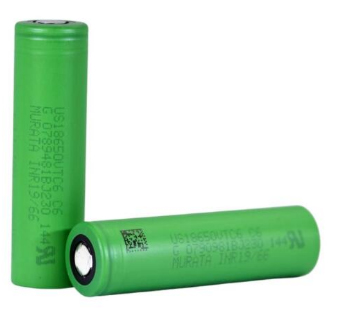
many many Sony Murata VTC6 18650 3000mAh 15A batteries to power it. I will need multiple battery
configuations of batteries set in series - so one battery pack will be 24v, one will be 5v, one will
be 12v, one will be 48v etc. That or we just do 48V and make a buck converter(s) chop that down to the
various smaller voltages we need. This is a decent option I'll have to consider. That aside, I will
want internal batteries built into the robot - as many as we can manage to fit with our dire space
constraints, then I will also want to have the option for the robot to carry a backpack of batteries
that he can plug himself into in order to gain additional battery life and have the ability to operate
continuously. While one battery backpack is cooling/charging, another can be charging and a 3rd set can
be operating the robot. Three sets of batteries then sounds like the ideal setup for constant robot
runtime. He will be able to plug himself into the wall in whatever room he goes into so that
he can always begin recharging wherever he goes. This charging cable should be at least 12 feet long
so that he can move about a room doing whatever activities he likes while charging at all times and will
be retractable so that it can pull back into his body when he's not using it - it will come out of his
lower back. The AC power coming in through this cable will be converted via a custom ac/dc buck converter(s)
and can be made into any votage(s) I want in DC to charge batteries and run the robot simultaneously.
Power Consumption Estimates:
For my humanoid robot I've got about 300 motors total, but for a high-strain activity like a deadlift, only a subset is under peak load. The legs, glutes, and back use the 10 big 4082 motors, the torso/back uses 25 mid-size 2838/3650 motors, and about 70 small 2430 motors handle arms and fingers at holding or assisting load.
Starting with the small 2430s, each is rated 200W at 7.4V and 20A. I'm assuming 60% of rated power for this deadlift scenario. So per motor:
200W x 0.6 = 120W
With 70 motors:
120W x 70 = 8,400W == 8.4kW
For the 25 mid-size 2838/3650 motors, rated around 500W each, I'm assuming 80% load:
500W x 0.8 = 400W per motor
25 x 400W = 10,000W = 10kW
For the 10 big 4082 motors, rated ~2,300W at working voltage, I'm assuming 90% load:
2,300W x 0.9 = 2,070W per motor
10 x 2,070W = 20,700W == 20.7kW
Adding them together gives the instantaneous power draw for the deadlift:
8,400 + 10,000 + 20,700 = 39,100W == 39.1kW
For batteries, I'm using 500 Sony VTC6 cells (150 on-body, 350 in backpack). Each cell is nominally 3.7V, 30A short-pulse (5s). 500 x 30 x 3.7a = 55,500W == 55.5kW
We are then using 39kw of a possible 55kw to perform the deadlift leaving a 16kw buffer.
Sequencing the motors realistically allows full-body high-strain movements like a deadlift without exceeding battery limits,
Electronics / PCs Processing
Arduinos, gate drivers, sensors: ~150-200W > trivial compared to motors.
Mini-ITX gaming PC in torso + high-end humanoid PC in head: ~500-1,000W total - still small relative to motors under high-strain
|
|